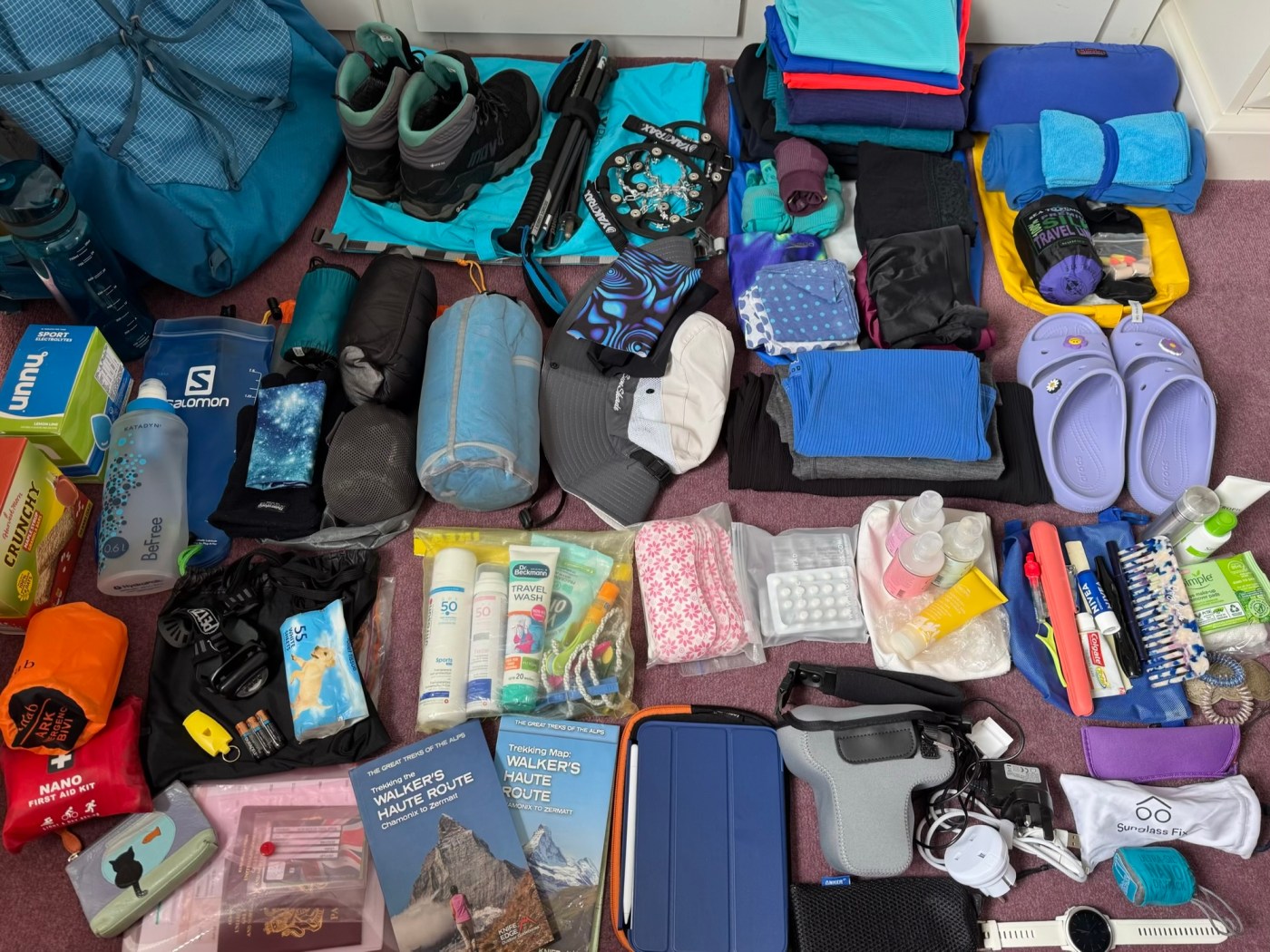
Today, I’ve been through my kit for the trek, managing to reduce what was quite a large pile down to 8.5 kilograms, including my rucksack…. who needs a 23 kilogram luggage allowance?! My pack still feels very heavy to be carrying up and down mountains for 3 weeks though! Our guidebook suggests you can do treks like the Walker’s Haute Route with a base kit of 5-6 kilograms, but we’ve decided we need a few extra items, partly because we have an additional week in an Airbnb in Kandersteg, but also because previous experience has shown us that some things help make our trips more enjoyable or comfortable. Here’s what made the final cut. Hopefully, this blog will make packing faster and easier next time we do a trek!
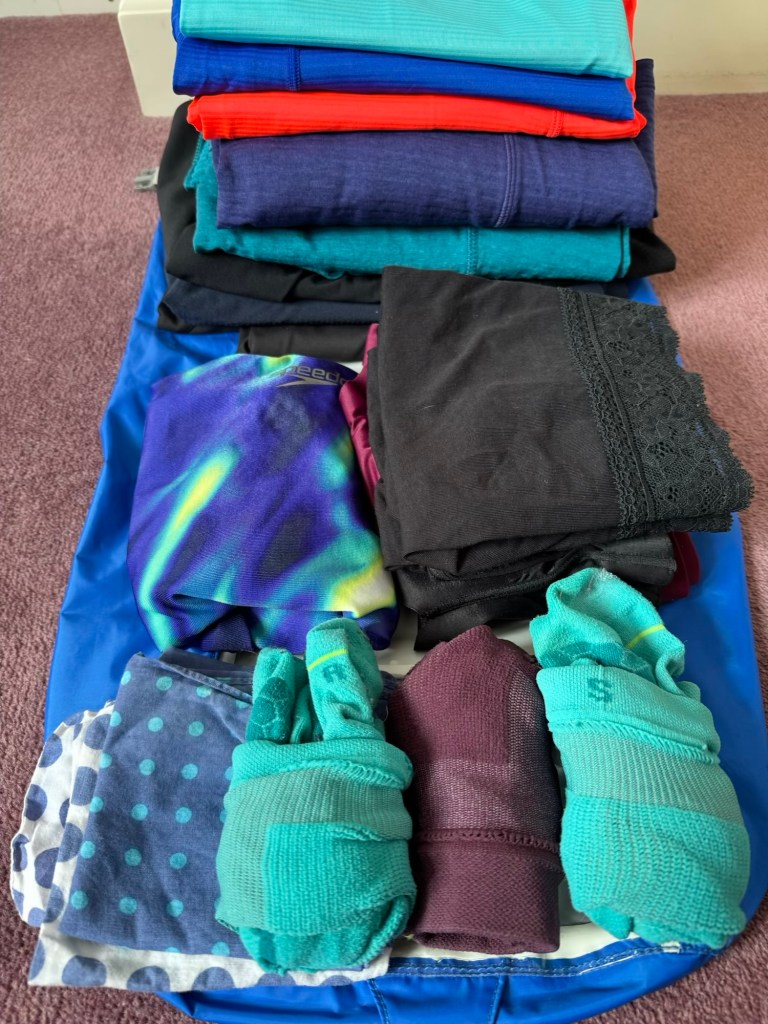
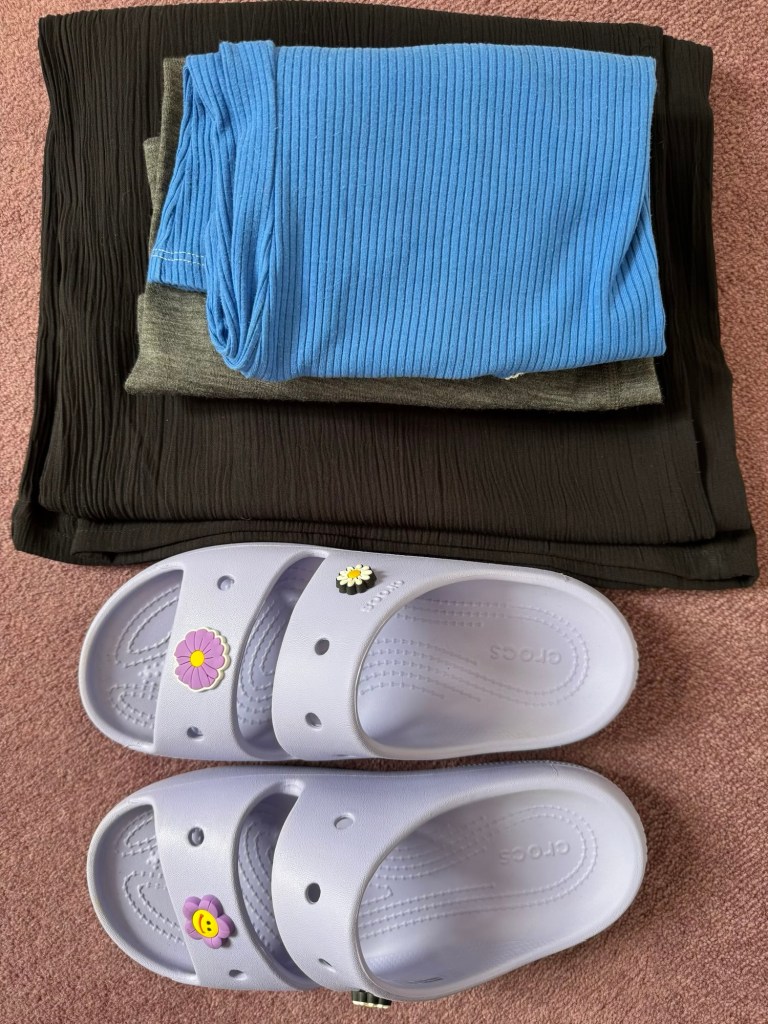
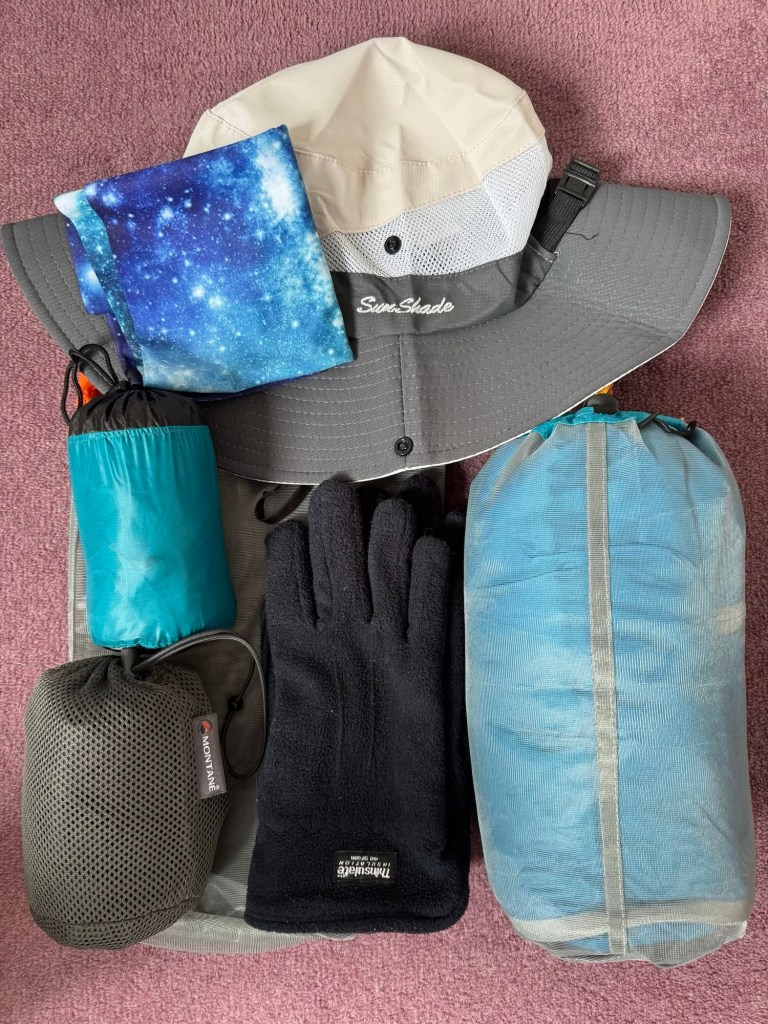
I have 3 sets of hiking clothes… one on, one off and one in the wash… 3 technical T shirts, 2 light long sleeved fleeces, a pair of trousers, 2 skorts, and 3 lots of socks, knickers and crop tops. I also have a set of comfortable clothes for the evening, which will feel smarter if we go out for meal, and a swimming costume. For when it rains or if I’m cold, I have a waterproof smock, a poncho, a down gilet and some light waterproof trousers… Also, a sun hat, a buff that will double up as a warmer hat, and fleece gloves.
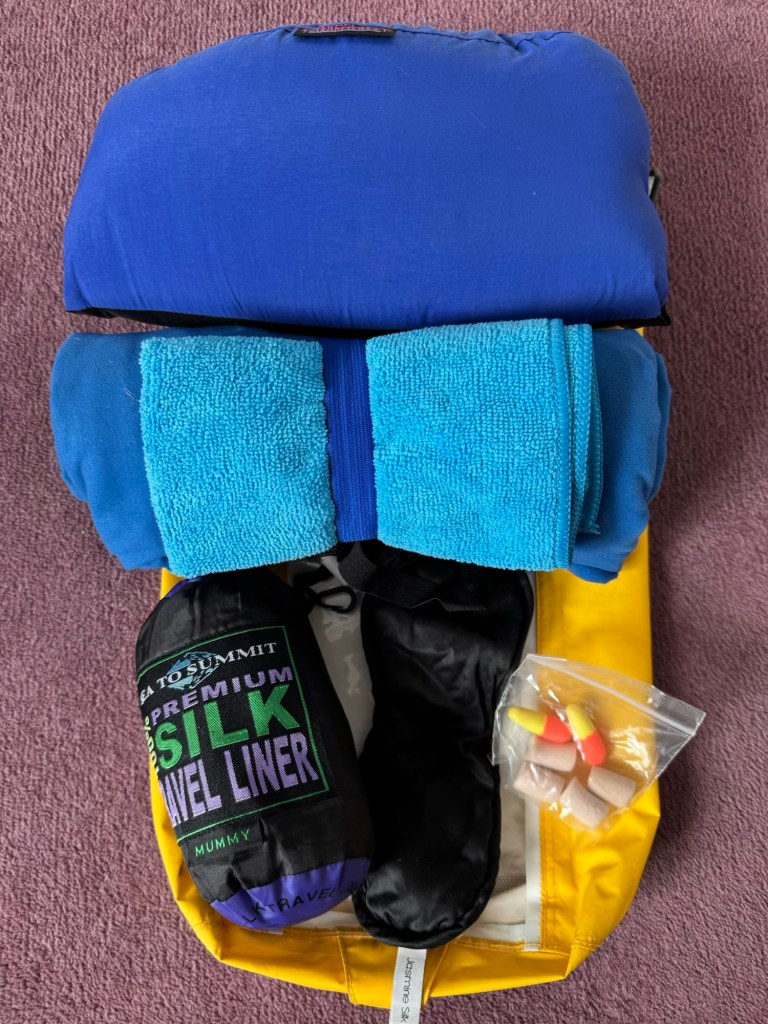
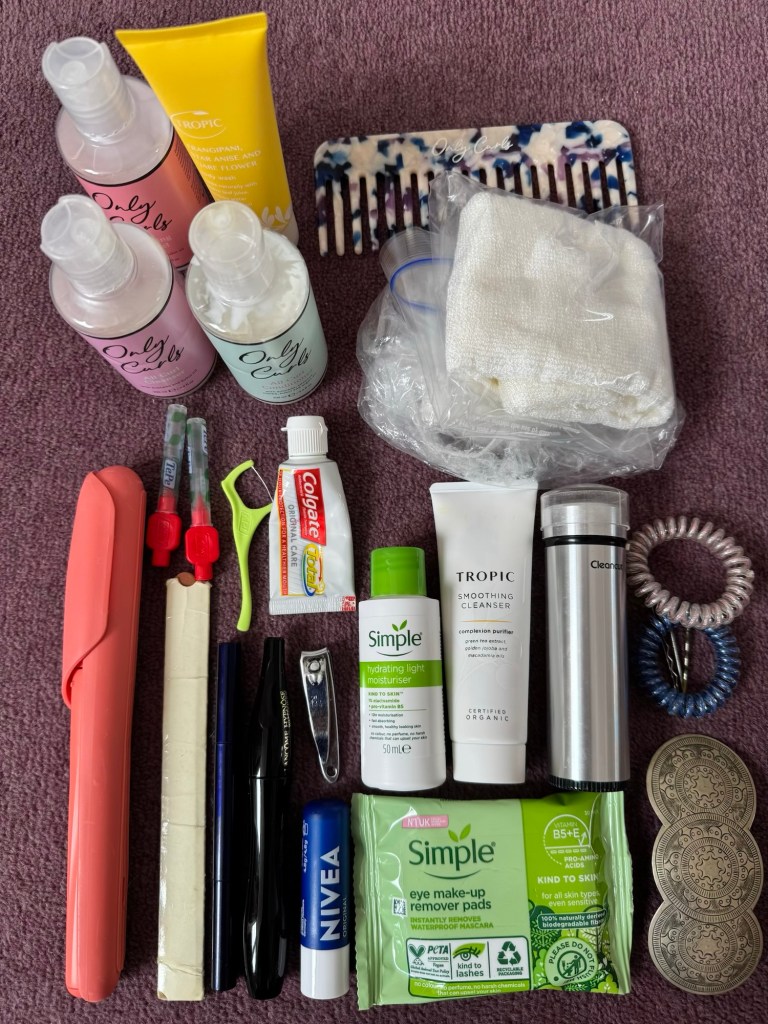
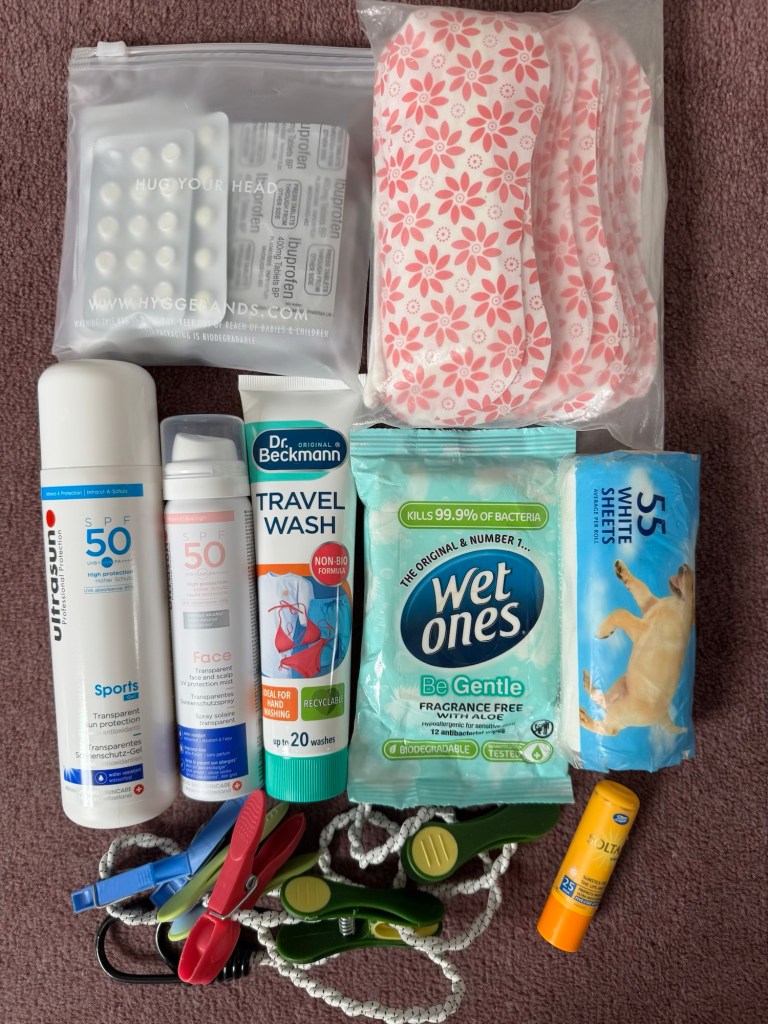
For the mountain refuges, we have silk sleeping bags, small pillows, eye masks, ear plugs and microfibre towels. I’ve tried to reduce my toiletries to the minimum, although my battery powered toothbrush and shaver feel like luxuries! Sun protection is obviously very important, especially at altitude, and I have some basic medication in case we need it… analgesics, antihistamines, loperamide etc. Travel wash and a light clothes line are on our essentials list when we’re trekking for so long.

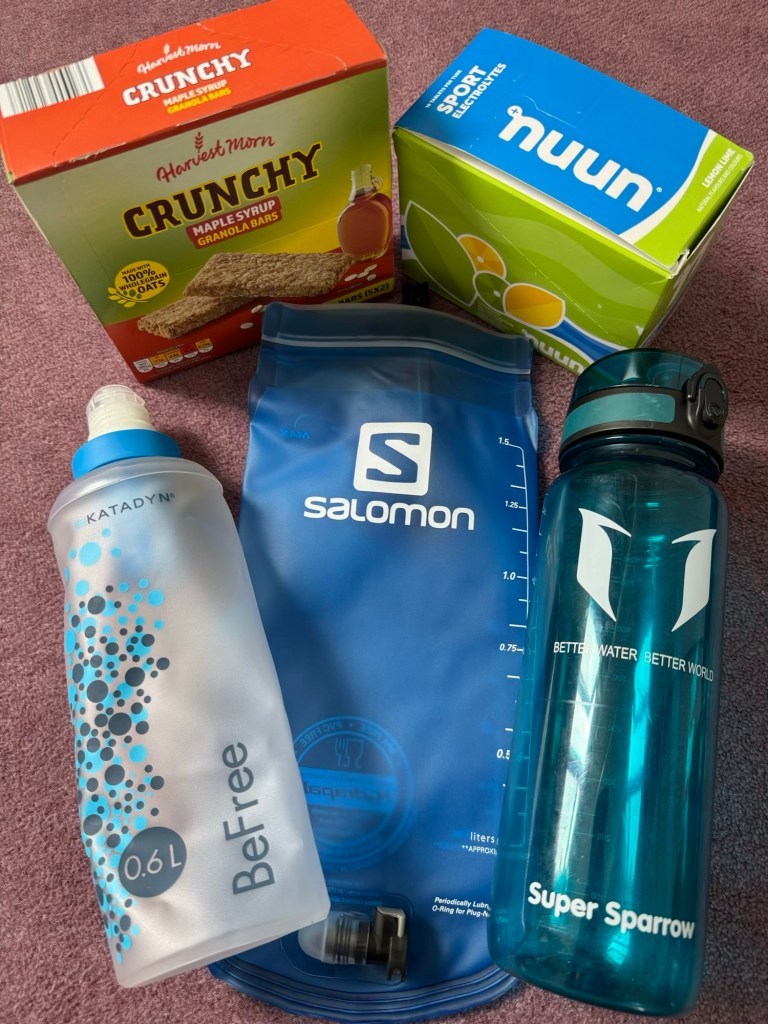
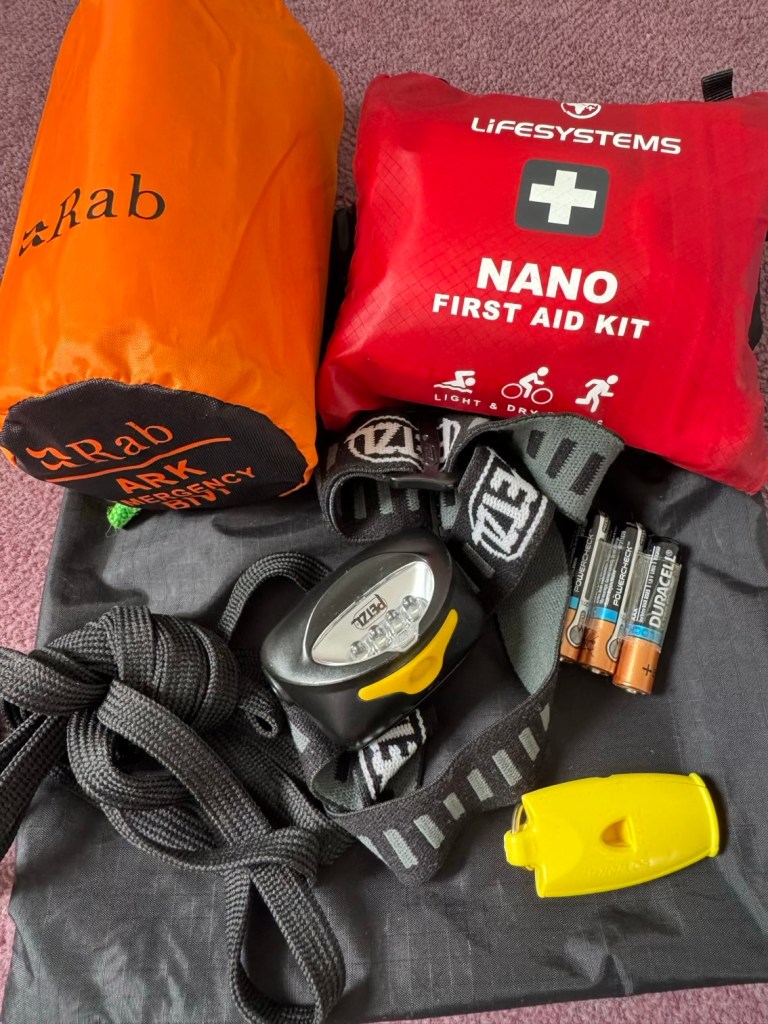
I’ll be wearing my favourite lightweight Inov8 hiking boots, which John has cleaned and reproofed for me. We’re hiking the trail early in the season and there is currently still snow in some places so microspikes are another essential, as are our carbon poles, to save some of the pressure on our aging knees, especially on long descents. The route takes us into some remote areas so we have plenty of water containers and a water filtration system. Safety kit, which we both carry in case we’re separated for some reason, includes a basic first aid kit, an emergency shelter, a head torch and spare batteries, and a whistle.
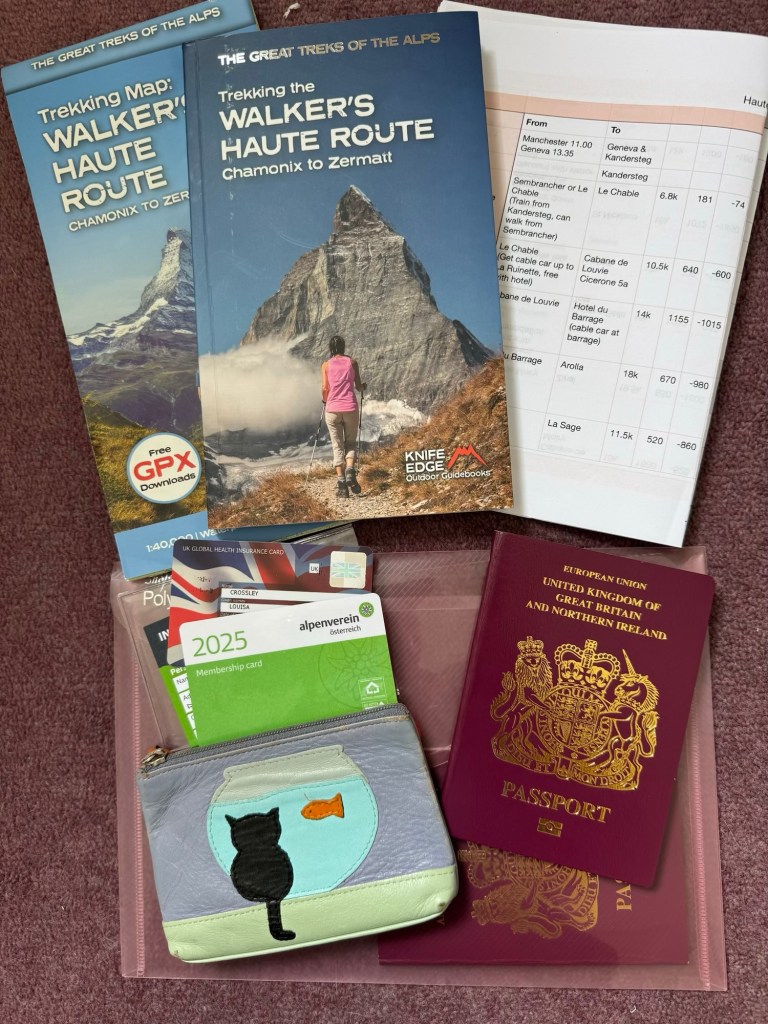

The route for each day has been downloaded onto our phones and our watches have navigation aids, but we also have a map, compass and guidebook. We haven’t forgotten our money, passports, European Heath Insurance cards or Austrian Alpine Club (AAC) cards (which cover us in case we need rescuing). They may be considered luxuries on a trek, but I have my camera and iPad (with books downloaded) together with adaptors, charging leads and a power bank (for when we don’t have electricity). Finally, we’ve packed sunglasses, reading glasses and tiny rucksacks that we’ll use for shopping and hand luggage on the plane.
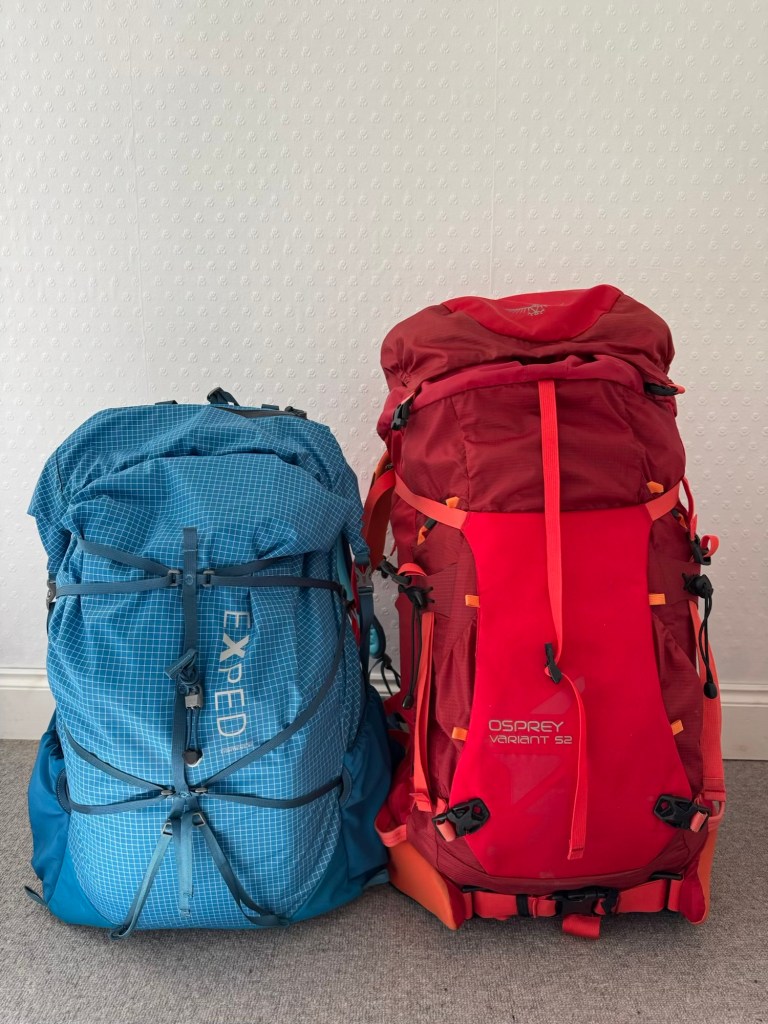
It’s hard to believe all these items fit easily into our rucksacks, encased in dry bags in case we get soaked. All we need to add is food and water each day, which will take the weight of my pack to about 11 kilograms at the start of each day. John is taking some of the heavier items, such as books, sun protection, and spikes, so his pack weighs more than mine. That’s the price he pays for talking me into these adventures, and for being fitter than me!
 Ramblings
Leave a comment