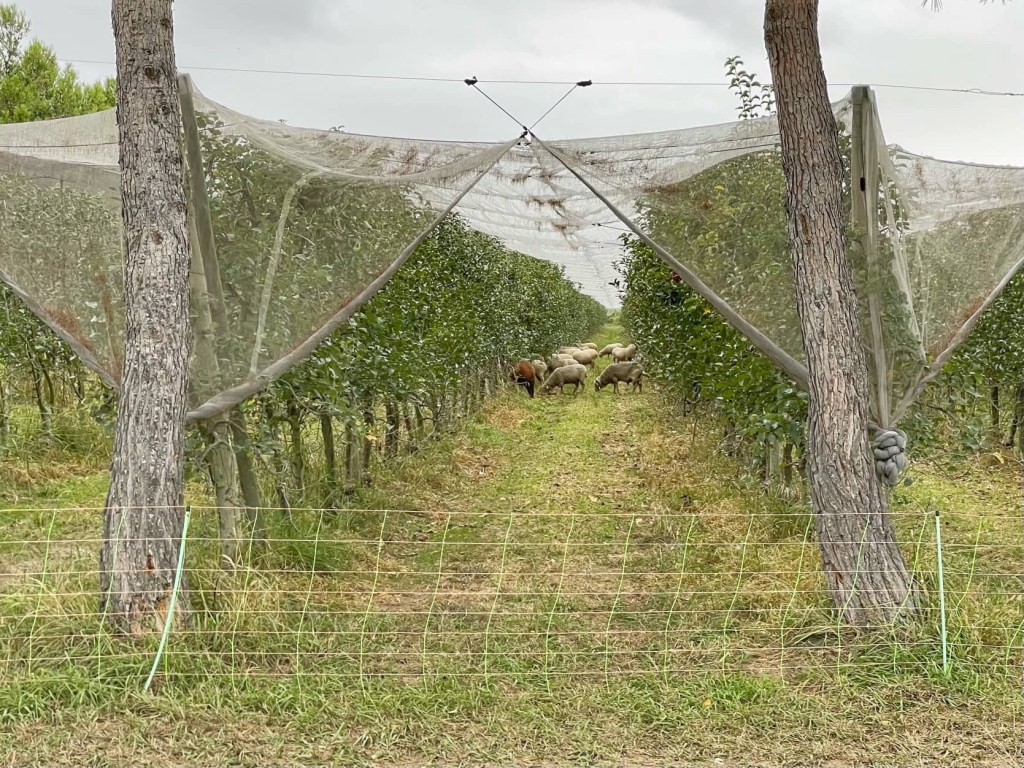
We woke up to the sound of sheep having their breakfast, grazing between the apple trees on the orchard where we stayed. Before we left the France Passion site, we popped to the shop to thank the owners for letting us stay and picked up some apples, apple juice and jam… all freshly made and delicious.

Our first stop was the Musée de la Camargue. Although most of the exhibitions were in French and it became a bit tedious using an app to translate the signs, we really enjoyed the subtitled films about the area. They were very long and, when the first had finished we were going to leave. However, it had started raining so we went back and watched the second!

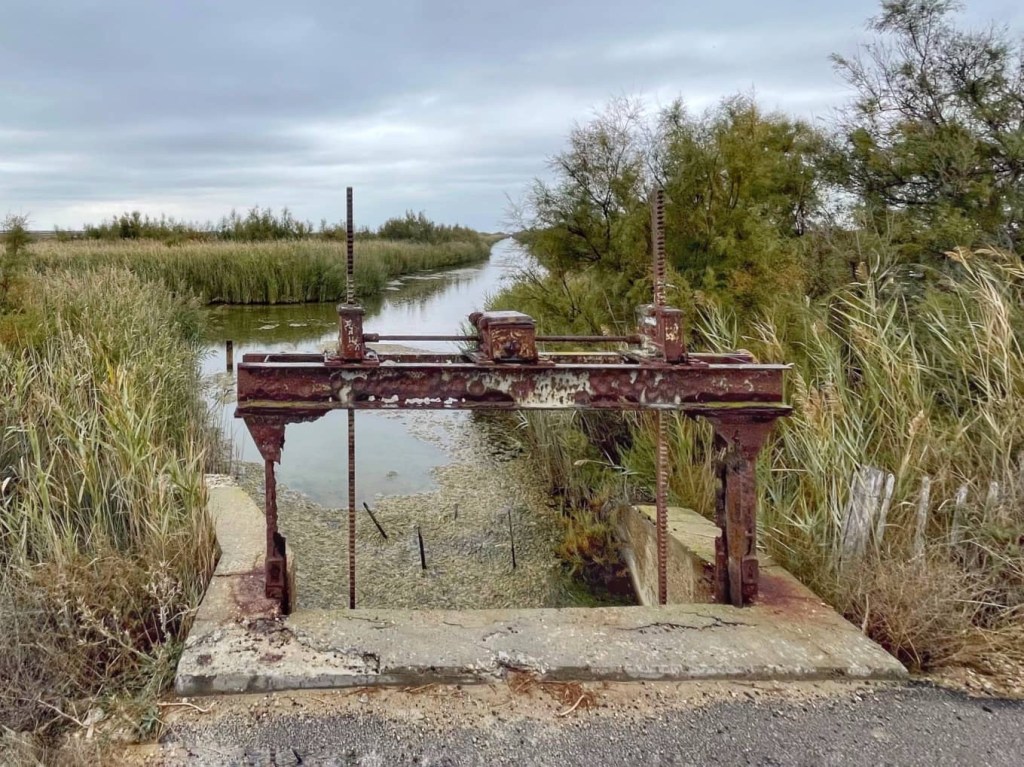
The Camargue national park is a vast area at the Rhône river delta. It’s made up of sandbanks, marshland pastures and wetlands. Some areas are fresh water, others are seawater, and others are somewhere between the two, providing a wide variety of ecosystems. The films told us all about the fragile nature of the environment and its wildlife and the efforts being made to conserve it… we particularly liked hearing about the terrapins and seahorses that are flourishing, and are very cute!
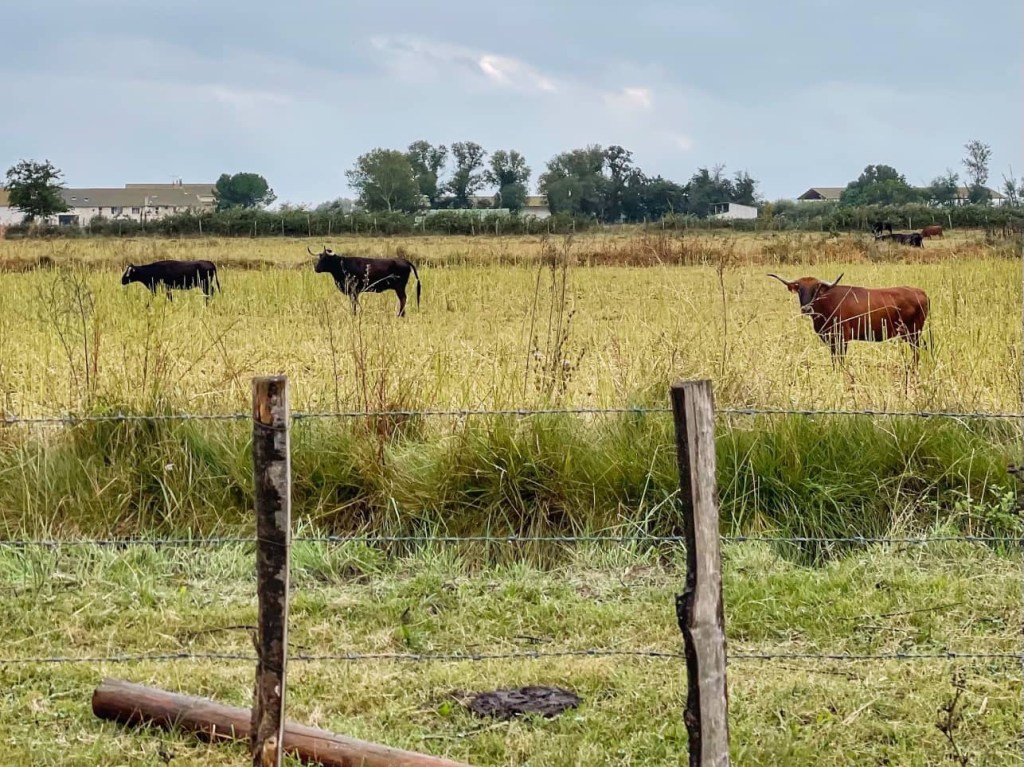
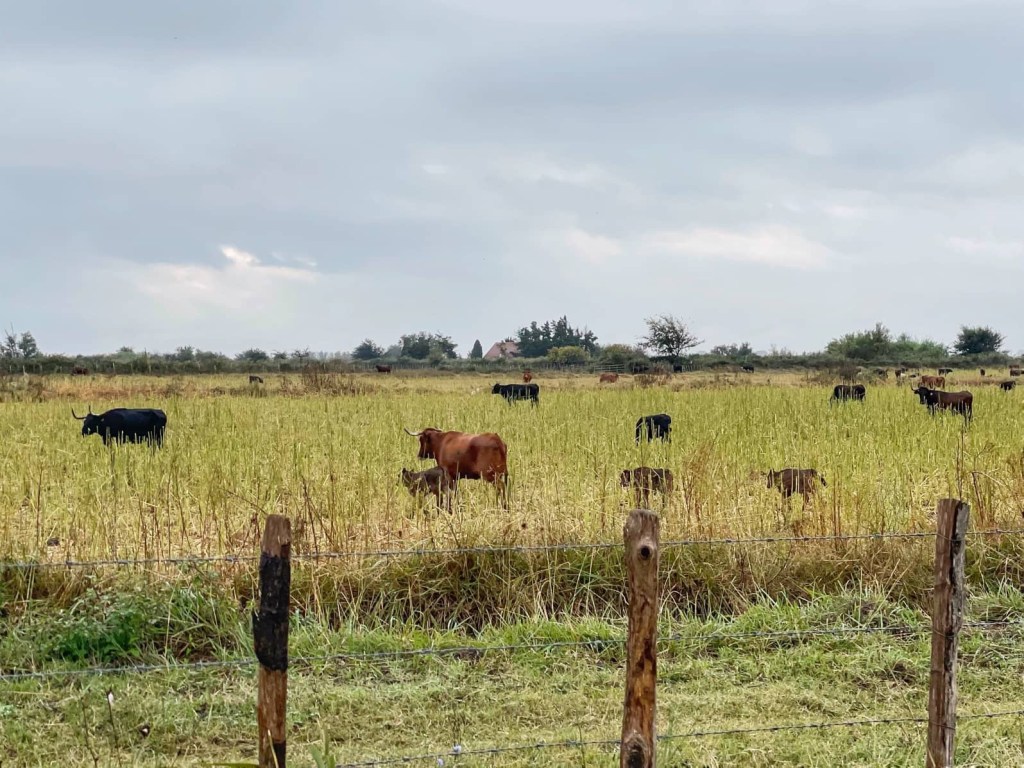
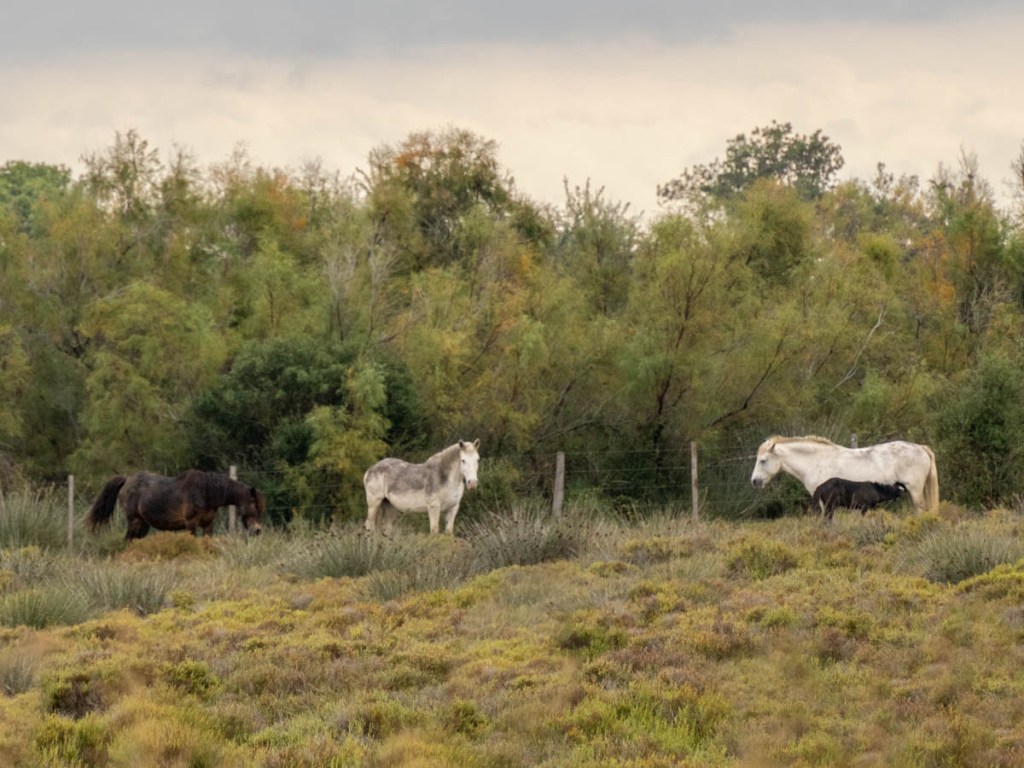
Cattle with huge horns and semi-wild white horses roam the marshlands. We saw egrets perched on their backs but didn’t manage to get a photo today. The bulls are bred for a bloodless variant of bullfighting, as well as for their meat. The horses’ foals are dark brown and turn white when they are between 4 and 7 years old. We didn’t see any close up. I think everything was sheltering from the wind and rain today!
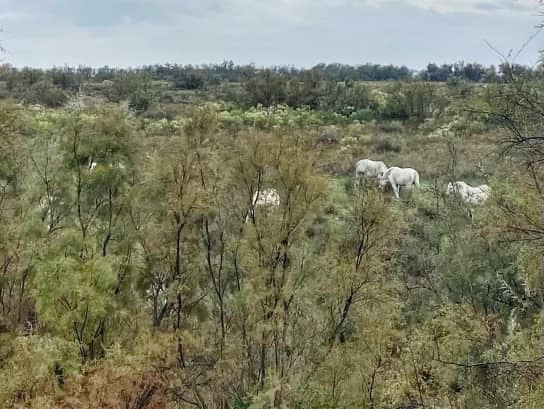
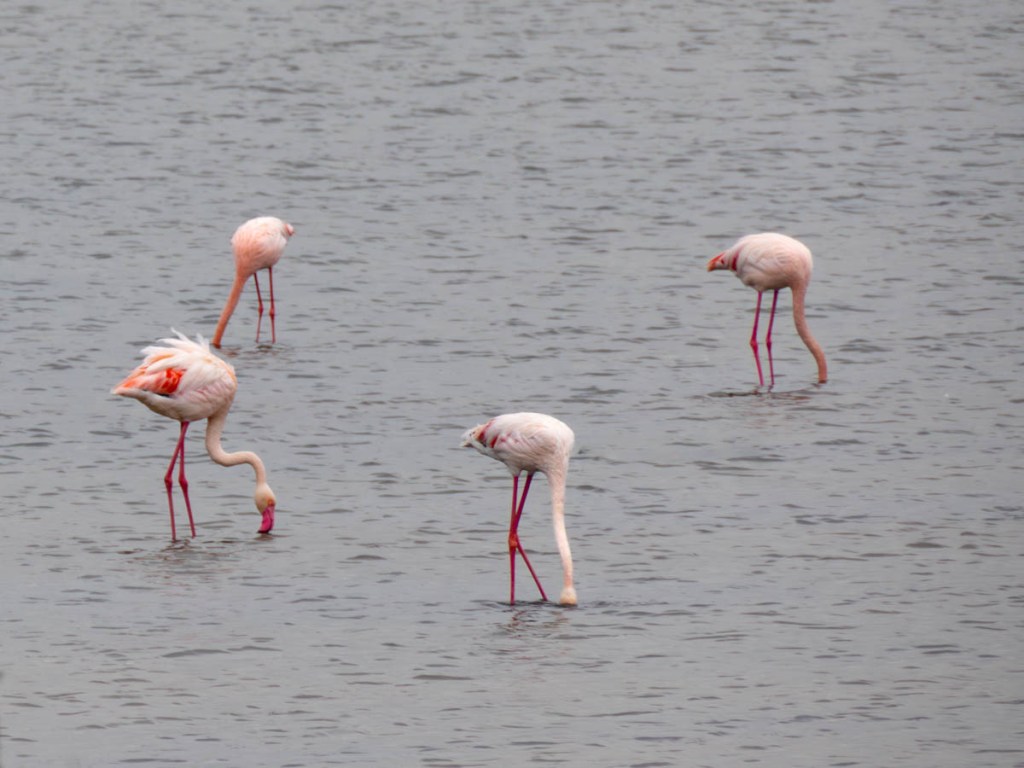
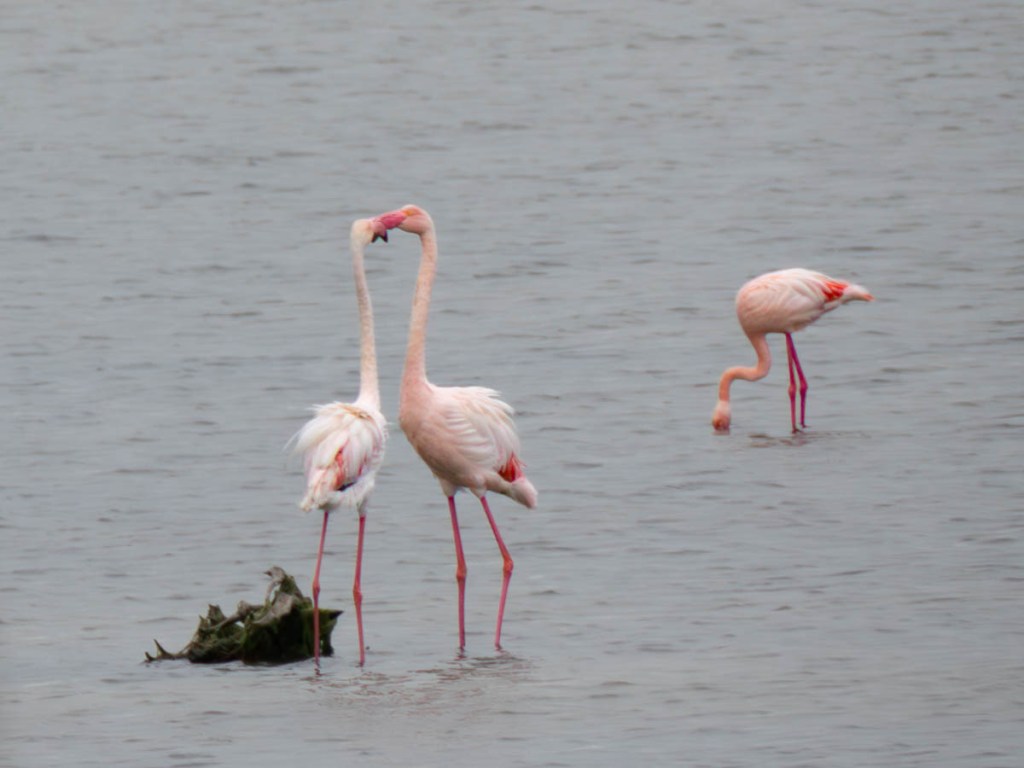
The Camargue has a network of channels and lagoons that are home to many wetland wildfowl and visited by migrating birds. We stopped at some viewpoints on the largest lagoon, Étang de Vaccarès and I was pleased to see flamingos. They breed here, are pink because they feed on crustaceans such as shrimps, and they stand on one leg so only one foot gets cold at a time, while they other is warmed up.
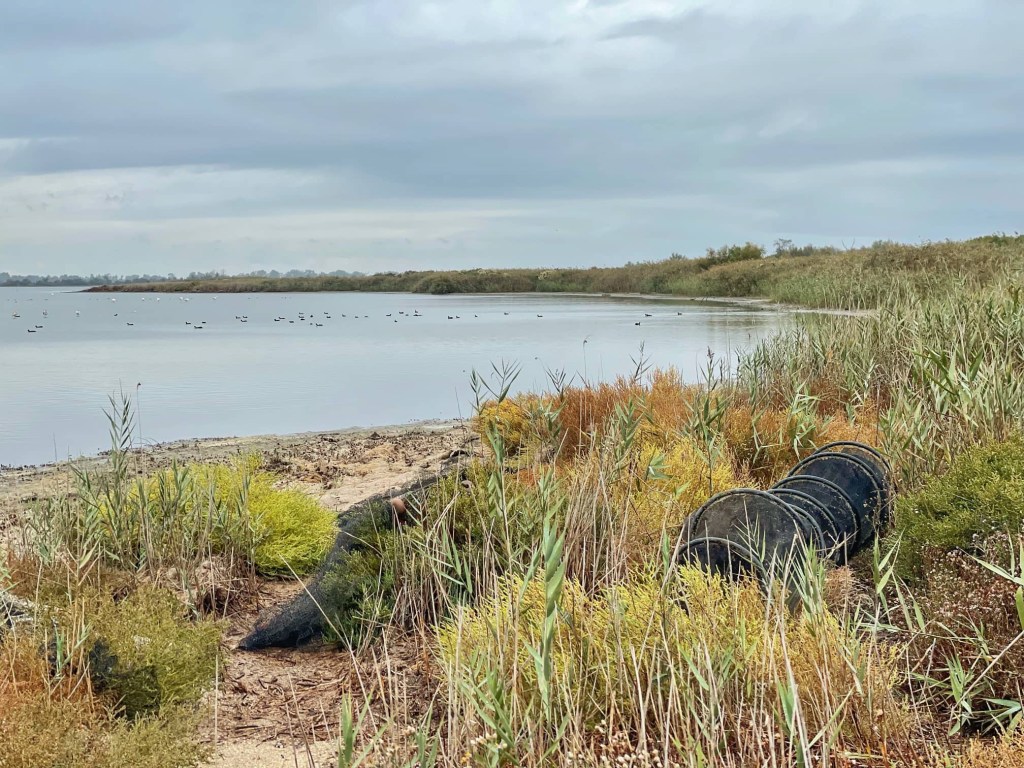
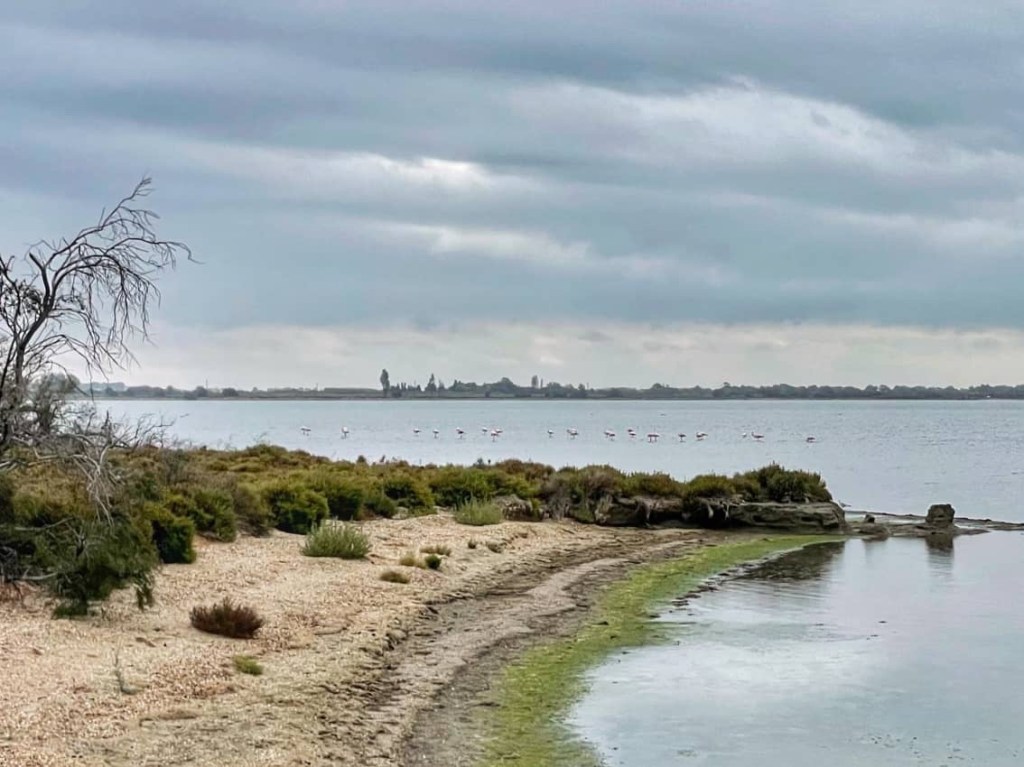
More than 20,000 of these beautiful birds live in the Camargue’s lagoons but, as with many other wildlife species, are under threat from climate change and pollution washing down the River Rhône. I’m hoping to visit a bird sanctuary and see the bird life close up tomorrow. I hope the weather is kind, although very strong winds are forecast. One advantage of the wind is that the mosquitoes haven’t bothered us too much, although John has squashed a few that managed to get into Bertie!
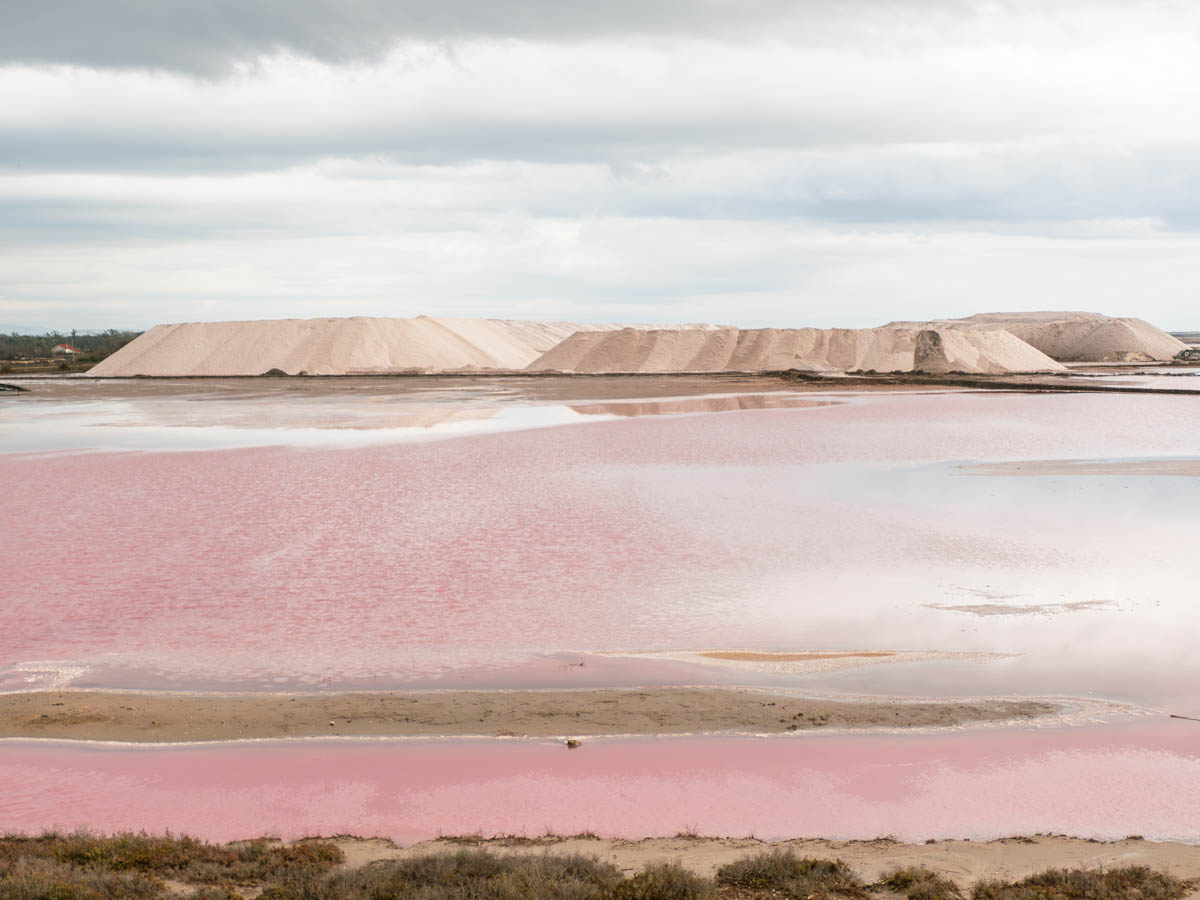
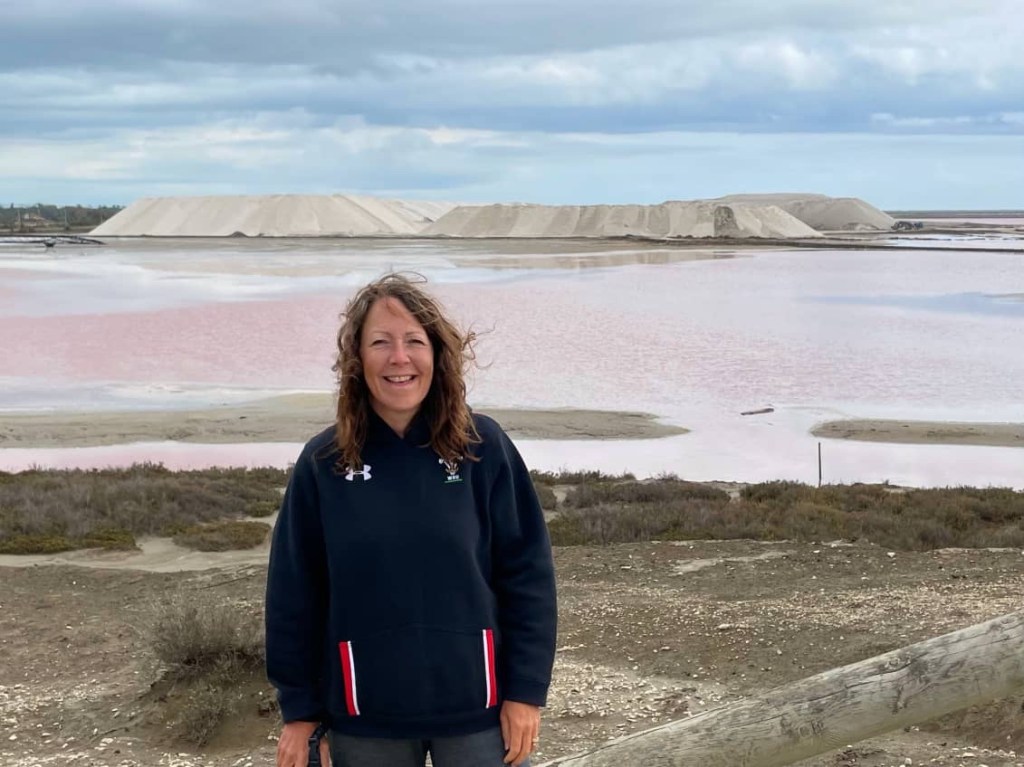
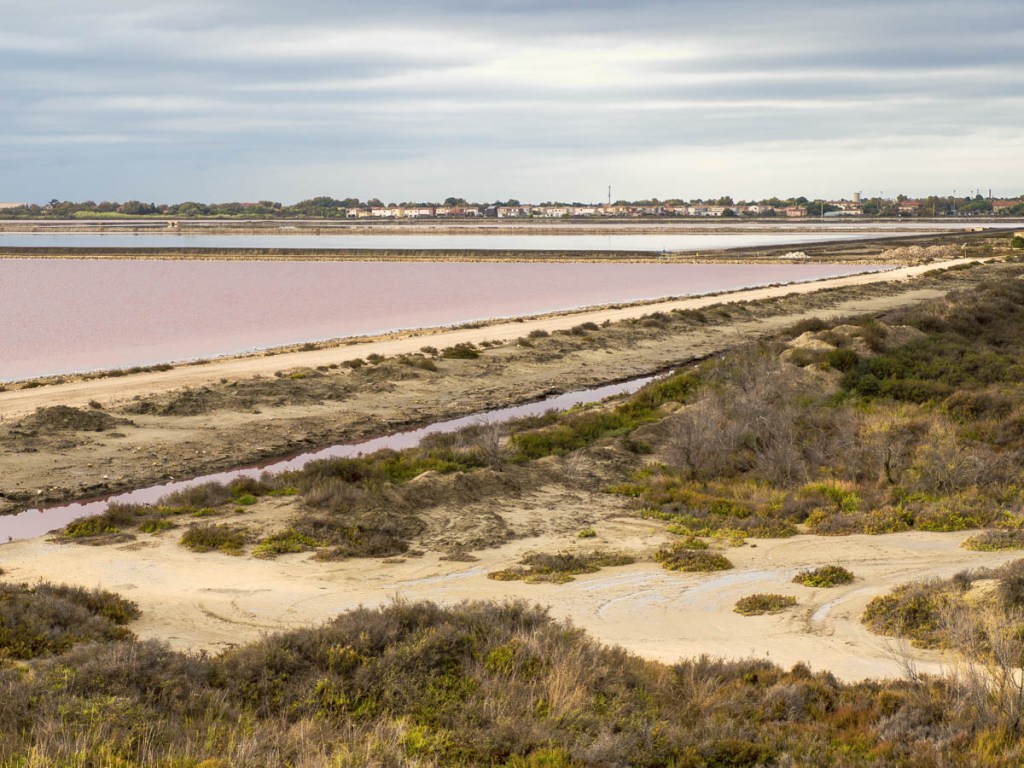
Finally, we visited the salt pans in the Étang du Fangassier. These are lagoons that have been adapted to maximise their salt concentration. I was fascinated by the mountains of salt, and the pink of the water, apparently caused by algae. 350,000 tonnes of salt are produced here each year, mainly for snow melting.
Now we’re on another France Passion site, Maison du Riz. I was surprised to discover that rice is produced in the Camargue in paddy fields that are supplied by water from the Rhône by a network of canals, and that France produces most of its own rice. You learn something new every day!
 Ramblings
Well, we do learn something every day – two for me! I didn’t know the white Camargue horses were born dark brown and I am very surprised to hear France produces all its own rice! Had no idea there were paddy fields in the delta – brilliant 🤩
LikeLiked by 1 person